reliable steering of secure communication.


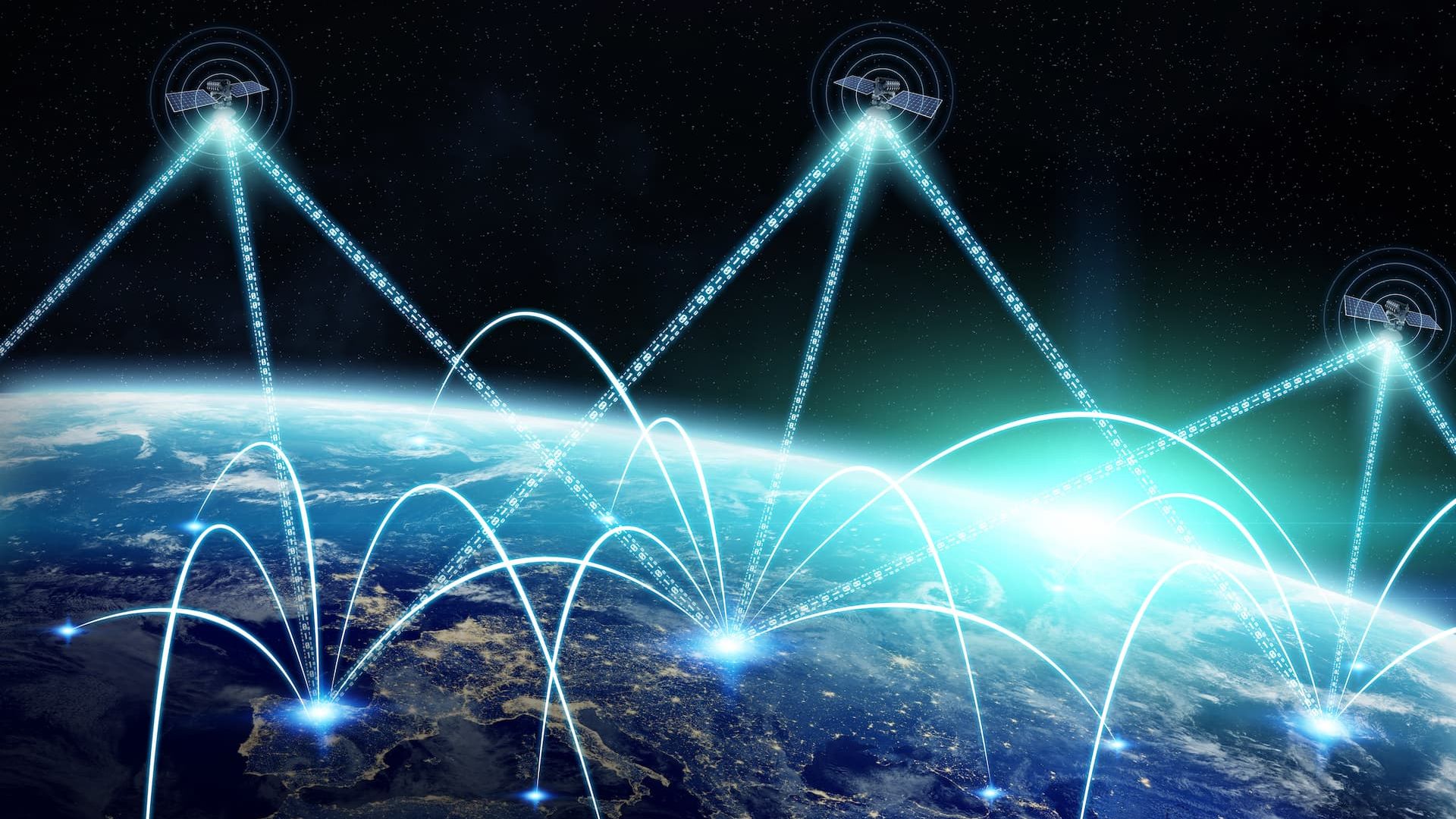
Next generation data communication using laser signals between ground stations, satellites, ground vehicles and aircraft, for example, will be at the terabit per second level. This applies to civil as well as military purposes. Reliability and bandwidth depend on the quality of the free-space optics instrumentation. We develop advanced optomechatronics systems for accurate conditioning and pointing of incoming and outgoing laser beams.
Laser satellite communication imposes high demands on data quality and processing speed for the required communication terminals. Challenges include the extreme conditions, the strict volume and mass limitations, and the atmospheric disturbances. Terminals must be equipped with high-end mirrors for extremely accurate pointing, wavefront sensors for adaptive optics, and high-level programming for efficient data processing. To meet the requirements, we develop high-quality optomechatronics solutions and build space- and defense-qualified systems.
While secure, high-bandwidth communication is one of the main military applications of free-space optics, other applications come within reach as well. Think of high-resolution surveillance and tracking of high-speed and small objects such as drones. Either way, security is provided by the systems we design and build, using our unique combination of optics, mechatronics and vision knowledge combined with our production expertise.
We combine our knowledge of laser satellite communication with that of VDL ETG in our joint venture FSO Instruments. This joint venture is inspired by TNO technologies allowing laser satellite communication to take the step towards industrialization.

Defense is acquiring more and more electric operations and communication systems. This makes supplying power for missions in the field a challenge.
Unmanned system technologies can help defense organizations increase the effectiveness and safety of operations and people.
New technological developments for application in systems for defense are getting more and more advanced and move towards higher electrical power usage.
No matter how much high-tech is wielded, the success of defense operations largely depends on the military personnel in the field.
Modern technology can help defense organizations increase the effectiveness and safety of missions. This includes smart systems, artificial intelligence and realistic simulations.
Being prepared is half the victory. Obviously, this also applies to defense operations.